
If you walk into any traditional Indian household, the heart of the home is usually the living room—a place of chai, loud conversations, and a constant flow of family members. For a new puppy, this vibrant energy is exciting, but it can also be overwhelming.
Many Indian pet parents recoil at the word “crate.” We think of it as a cage, a punishment, or something that feels “un-Indian” for our pampered baccha. But at PawKlub, we invite you to look at it differently.
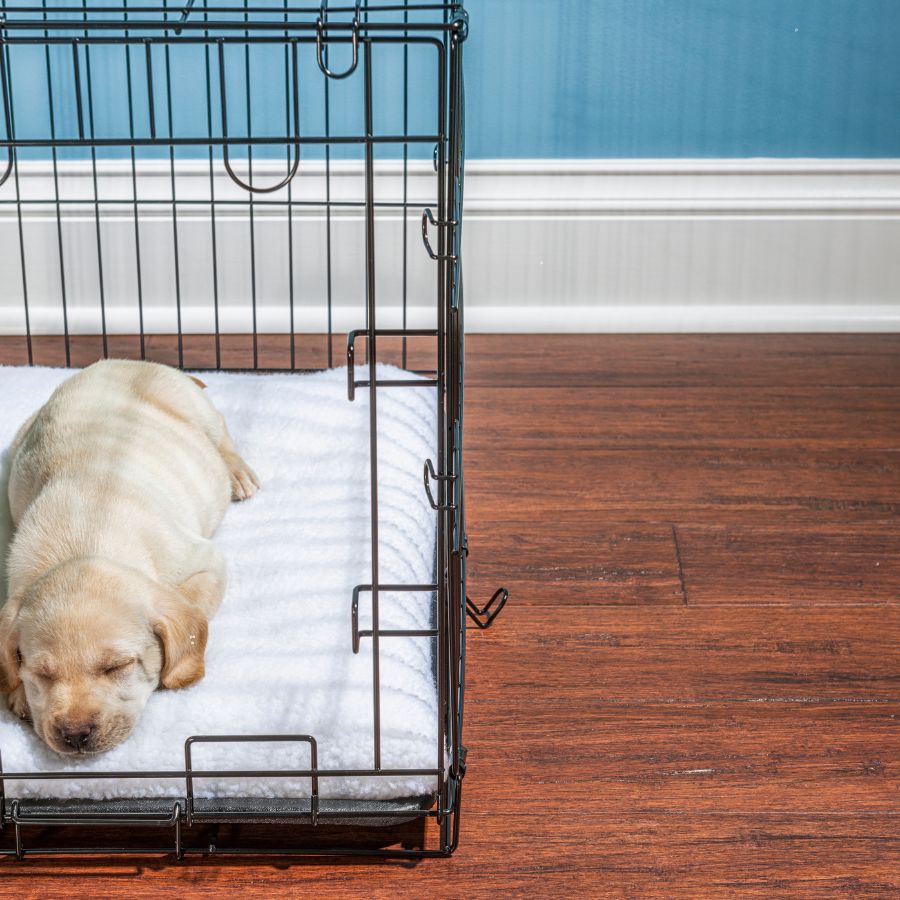
Imagine having your own private bedroom where no one can bother you when you’re tired. That is exactly what a crate is for a dog. When done correctly, crate training a puppy isn’t about restriction; it’s about providing a “Den”—a secure, quiet sanctuary in the middle of a busy home.
In this guide, we’ll explore how to crate train a puppy using a heart-first approach, ensuring your pet feels safe, not sidelined.
Why Crate Training is a Game Changer for You
Beyond giving your dog a bedroom, the crate serves three vital purposes in an Indian context:
- Potty Training Catalyst: Since dogs have an instinctual urge not to soil their sleeping area, a crate is your best friend when you potty train a puppy.
- Safety During “Mehmaan” Time: When guests who are afraid of dogs visit, or when the Diwali crackers start bursting, the crate is a familiar “Safe Zone” that prevents anxiety.
- Travel Ease: Whether it’s a road trip to the hills or a flight, a crate-trained dog is a calm traveler.
Step 1: Choosing the Right “Room” (The Crate)
In the Indian market, you’ll find metal wire crates, plastic travel kennels, and even stylish wooden ones.
- The Size Rule: The crate should be just big enough for your puppy to stand up, turn around, and lie down comfortably. If it’s too big, they might use one corner as a bedroom and the other as a bathroom.
- Placement: Place the crate in a corner of the room where the family spends time (like the living room). Do not tuck it away in a dark, isolated store room. Your puppy wants to see you, even if they are resting.
Step 2: The Art of the “First Date” (Introduction)
The biggest mistake is forcing a puppy into a crate and locking the door. This creates “Crate Anxiety.” Instead, we want the puppy to choose the crate.
- The Treat Trail: Drop some high-value treats (like a piece of boiled chicken or their favorite biscuit) near the door, then just inside, and finally at the very back.
- Meals in the Crate: Start feeding your puppy their breakfast and dinner inside the crate with the door wide open. This associates the space with the happiest moment of their day—food!
- The Scent of Home: Put an old T-shirt of yours inside. Your scent is the most comforting thing in the world to them.
Step 3: Closing the Door (Gradual Progress)
Once your pup is happily stepping inside to eat, it’s time to build “Duration.”
- While they are eating, gently close the door. Open it the second they finish.
- Slowly increase the time the door stays closed. Stay in the room with them initially.
- The “Quiet” Rule: If your puppy whines, do not open the door immediately. Wait for even three seconds of silence, then open it. This teaches them that quiet behavior gets the door open, not barking.
Step 4: The Puppy Crate Training Schedule
Consistency is the secret sauce of dog crate training in India. Puppies need a rhythm to feel secure.
A Sample Day for a PawKlub Puppy:
- 7:00 AM: Out for potty and a short walk.
- 7:30 AM: Breakfast inside the crate (Door open or closed for 15 mins).
- 8:00 AM – 10:00 AM: Playtime and training.
- 10:00 AM – 12:00 PM: “Nap Time” in the crate (This is when you do your office work or chores).
- 12:00 PM: Potty break and lunch.
Pro-Tip: In the Indian summer, ensure the crate is in a well-ventilated area with a fan or AC. Metal wires can get warm, so a cool mat or a light cotton sheet is better than a heavy woollen bed.
Step 5: Dealing with the “Night Cries”
The first few nights can be emotional. You might feel guilty hearing those tiny whimpers.
- Keep them Close: For the first week, keep the crate in your bedroom. Just seeing you or hearing your breathing can calm a puppy’s fear of being alone.
- The “Boring” Potty Run: If they cry in the middle of the night, take them out for a potty break. Keep it strictly business—no playing, no talking, no treats. Put them back in the crate immediately. This teaches them that crying at night only gets them a bathroom break, not a party.
The Emotional Connection: Security, Not Solitude
At PawKlub, we often see pet parents who feel like the crate is “mean.” But think about the life of an Indian street dog—they often seek out the space under a parked car or a hollow in a wall to sleep. Why? Because a “roofed” space provides a sense of biological security.
By crate training a puppy, you are giving them a gift: the gift of a calm mind. You are telling them, “In this 3×3 space, nothing can hurt you. You don’t have to guard the house. You don’t have to worry about the doorbell. You can just… be.”
Summary Checklist for a Happy Crate Experience:
- Never Use it for Punishment: If you put your dog in the crate when you’re angry, they will learn to hate it. The crate must always be a happy place.
- Watch the Clock: An adult dog shouldn’t be crated for more than 4-5 hours at a time. Puppies need much more frequent breaks.
- Remove Collars: To prevent any accidental snagging on the wires, always remove your puppy’s collar before they go into the crate.
- Toys are Key: Give them a safe chew toy (like a stuffed Kong) to keep their brain busy while they are inside.
Crate training a puppy is a labor of love that pays off for the next 15 years. It creates a dog that is confident, calm during travel, and house-trained faster than you can imagine.
Is your puppy’s crate their favorite nap spot, or are you still struggling with the initial whimpers? Tell us in the comments! Our PawKlub experts are here to help you navigate those first few “noisy” nights.
