
There is a specific kind of magic that enters your home the day you bring a puppy back. It’s in the frantic wag of a tail, the velvet feel of their ears, and that unmistakable “new puppy” scent. But let’s be honest—within 48 hours, that magic is often interrupted by a cold, wet surprise on your favorite Kashmiri rug or a puddle near the dining table.
In that moment, as you’re cleaning up at 3:00 AM, you might feel a flicker of frustration. You might wonder, “Does my puppy even understand me?”
At PawKlub, we want you to take a deep breath. Potty training isn’t just about hygiene; it’s one of the first deep conversations you will have with your dog. It’s about building a bridge of communication based on trust, not fear. Whether you’re living in a high-rise apartment in Mumbai or a bungalow in Bangalore, dog potty training is a journey of patience.
In this guide, we’ll walk you through how to potty train a puppy with kindness, consistency, and a plan that actually works for the Indian lifestyle.
Understanding the “Puppy Brain”
Before we talk about newspapers or cleaning sprays, we need to understand the biology. A puppy’s bladder is tiny. At 8 weeks old, they physically cannot “hold it” for more than two hours. Expecting a young pup to wait for your work meeting to end is like asking a toddler to run a marathon—it’s just not possible yet.
How to potty train a puppy successfully starts with empathy. They aren’t “messing up” to spite you; they simply haven’t learned that the floor is different from the grass outside.
Step 1: Choose Your “Spot” (The Indian Context)
In India, our homes vary. You need to decide immediately: Is your dog going to go outside on the street/park, or do you need an indoor solution like a balcony or a dedicated washroom corner?
- The Apartment Dilemma: If you live on the 14th floor, rushing down the elevator every time your pup circles the floor is impossible. Many Indian pet parents find success with “Pee Pads” or a dedicated “Balcony Patch” (synthetic grass over a tray).
- The Rule of One: Once you pick a spot, stick to it. If you change the spot three times in a week, you aren’t training the dog; you’re confusing them.
Step 2: The Gold Standard Routine
Puppies thrive on a clock. Their bodies are remarkably predictable. If you want to know how to potty train a puppy, you must master the “Transition Moments.”
Take your puppy to their designated potty spot:
- First thing in the morning (No coffee for you until the pup goes out!).
- Immediately after every meal.
- Right after a nap.
- After a vigorous play session (Excitement stimulates the bladder).
- Last thing before bedtime.
Pro-Tip for the Indian Household: If your home is busy with family members and helpers, put a “Potty Chart” on the fridge. Mark down every time the pup “goes.” This ensures no one forgets, and you can track their natural rhythm.
Step 3: Decode the “Puppy Dance”
Dogs almost always give a warning. You just have to learn to read it. If you see your puppy:
- Sniffing the floor intensely in a circular motion.
- Suddenly leaving a play session to go to a corner.
- Whining or staring at a specific door.
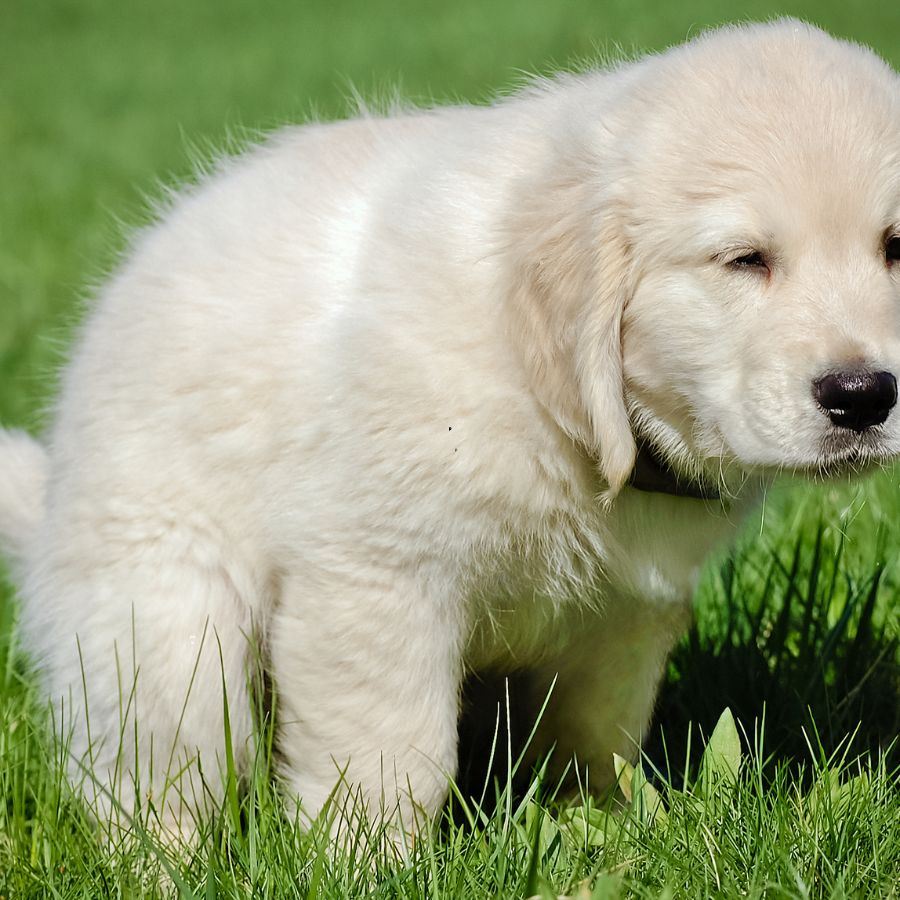
- Squatting (the final warning!).
The moment you see the “Sniff-and-Circle,” gently scoop them up and head to the potty spot. Don’t yell—yelling creates “Secret Poopers” (dogs who hide behind the sofa to go because they are afraid of your reaction).
Step 4: The Power of the “Cue Word”
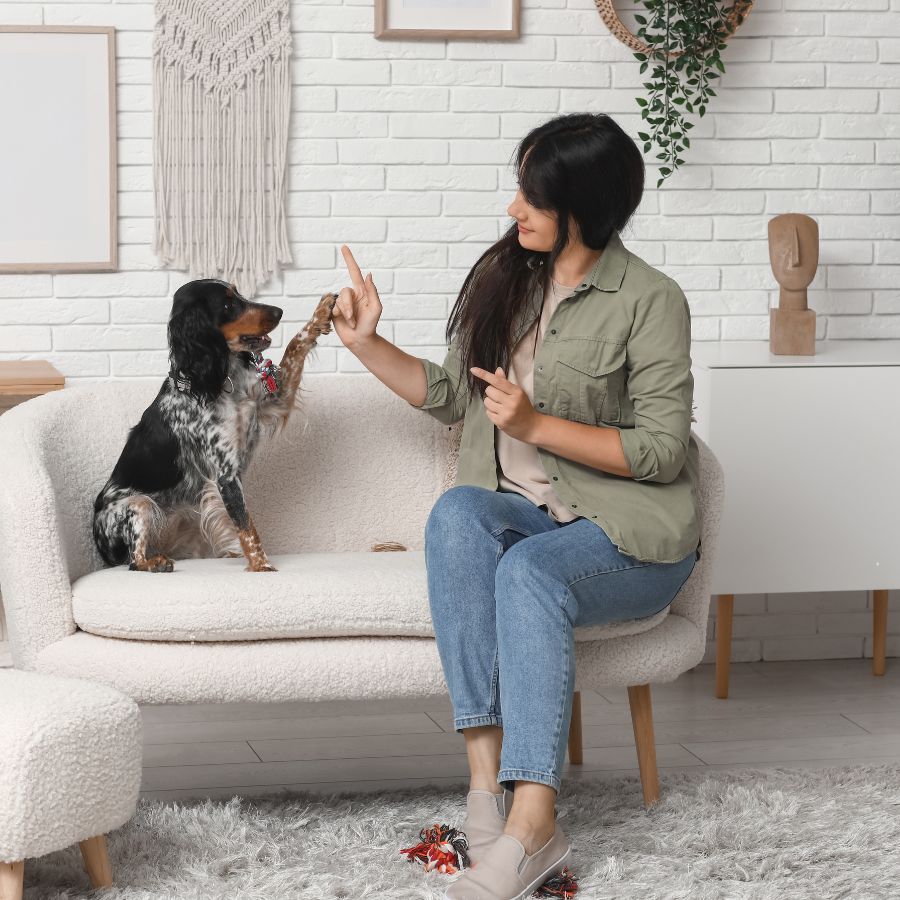
We talk to our dogs all the time, but during dog potty training, we need a specific “trigger.” Choose a simple phrase like “Chalo, Potty” or “Go Business.”
The second your puppy starts doing their business in the right spot, whisper the cue word. When they finish, celebrate like they’ve won an Olympic gold medal! Give them a small, high-value treat, a belly rub, and plenty of “Good Boy/Girl” praise. They need to associate that specific spot and that specific word with a massive dopamine hit.
Step 5: Dealing with Accidents (The “No-Shame” Zone)
Accidents will happen. Even the smartest puppy will have a setback. How you handle the mess determines how fast they learn.
- The Golden Rule: Never, ever rub their nose in it. This is an outdated, cruel practice that only teaches your dog to be afraid of you. It does nothing for their training.
- The Clean-Up: In India, we love our phenyl and floral floor cleaners. However, most household cleaners contain ammonia. To a dog’s nose, ammonia smells like… urine. If you clean a pee spot with ammonia-based cleaner, the dog thinks, “Oh, this must be a bathroom, it smells like one!”
- The Solution: Use an enzymatic cleaner. These special formulas actually break down the proteins in the waste so the scent is completely erased, even for a dog’s sensitive nose.
Step 6: Managing the Night Shift
Many Indian pet parents ask: “Do I have to wake up at 3 AM?”
For the first few weeks, yes. If you’re using a crate or a small gated area, the pup will naturally try not to soil where they sleep. A quick, boring, “no-play” potty break in the middle of the night will accelerate your potty train puppy goals significantly.
The Emotional Connection: Why This Matters
At PawKlub, we believe that every puddle on the floor is a lesson in leadership. When you potty train a puppy, you are teaching them how to live in your world. You are showing them that you are a consistent, reliable, and kind leader.
Think of the joy when, after weeks of work, your pup finally walks to the balcony door and looks at you, waiting to be let out. That’s not just a clean floor—that’s a bond. It’s the moment they’ve finally understood the rules of the “Klub.”
Summary Checklist for Success:
- Consistency is King: Same spot, same word, every single time.
- Watch the Water: Don’t restrict water, but pick up the bowl 2 hours before the final sleep time.
- Avoid the “Yell”: If you catch them in the act, a loud “Oops!” is enough to startle them so you can move them to the right spot.
- Celebrate the Wins: Positive reinforcement is 10x faster than punishment.
Dog potty training at home isn’t about having a perfect house; it’s about having a happy, confident dog who understands their environment. It takes 3 weeks for some and 3 months for others. Stay patient, keep your enzymatic cleaner handy, and remember—they’re just babies.
Is your puppy struggling with a specific spot in the house? Or have you found a “desi” hack that worked for your Indian home? Share your stories in the comments below! We’re all in this Klub together.
