


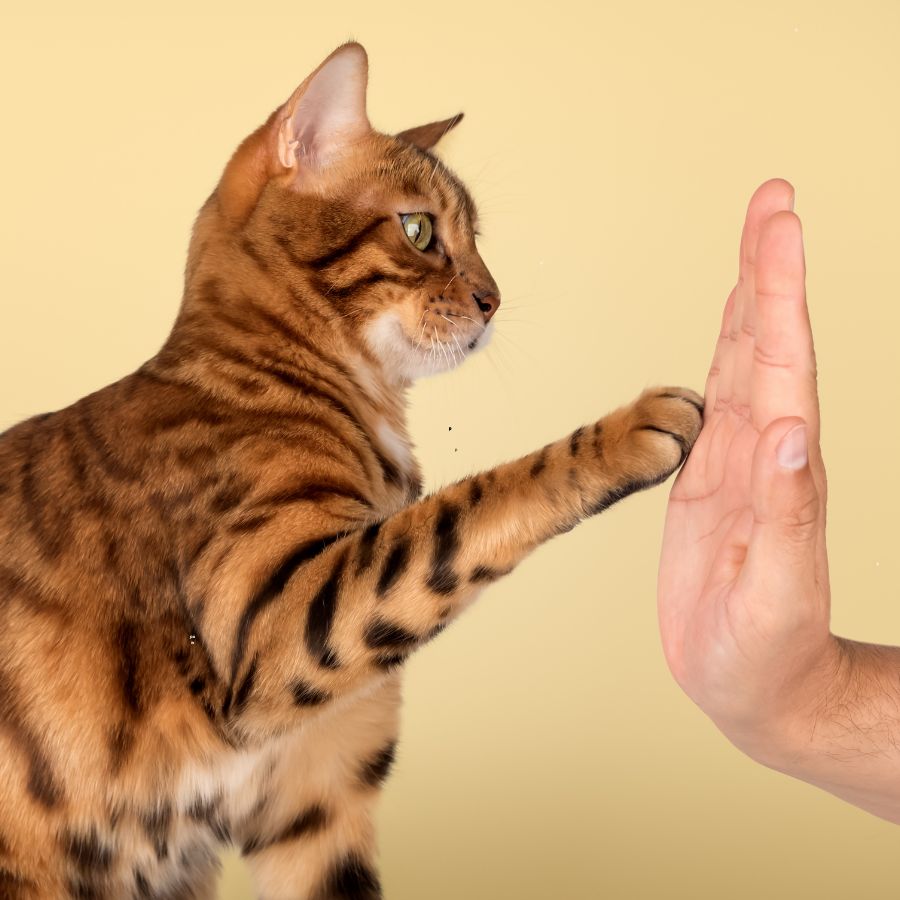
The Art of the Feline Recall
Can You Actually Train a Cat to Come When Called?
MYTH VS. REALITY
- The Myth: Cats are too aloof and independent to listen to commands.
- The Reality: Cats are highly motivated by incentives. If the reward is better than whatever they are currently doing, they will choose to come to you every single time.
THE RECALL LEVELS: A Step-by-Step Training Plan
Level 1: The Power Sound Selection
Before the training starts, choose your Call.
- Option A: Their Name (e.g., Simba!)
- Option B: A Unique Sound (e.g., a whistle or a double-click of the tongue).
- Option C: The Can-Opener Effect (the sound of a treat bag crinkling).
Pro-Tip: Cats hear high-pitched sounds better. A chirpy, upbeat tone works best in an Indian home filled with background noise.
Level 2: The Immediate Reward (0–2 Feet)
Start when your cat is already near you.
- Make your Power Sound.
- The second they look at you, give them a High-Value Reward (Lickable treats, boiled chicken, or a tiny piece of fish).
- Repeat this 10 times until they associate the sound with a Jackpot.
Level 3: The Room-to-Room Sprint
Move to the next room while your cat is preoccupied.
- Call them once.
- When you hear their little paws hitting the floor, get ready with the treat.
- The Golden Rule: Never call them for something they hate (like medicine or a bath). The Power Sound must always result in something amazing.
Level 4: The Real World Challenge
Try calling them when they are distracted (looking out a window or mid-groom).
- If they come, double the reward!
- If they don’t, go back to Level 2. Do not keep repeating their name—if you say Simba, Simba, Simba! and they ignore you, you are training them to ignore you.
THE PAWKLUB TROUBLESHOOTING FAQ
Q: My cat only comes when they see the treat bag. Is that cheating?
A: At first, yes. But the goal is to fade the visual. Keep the treats in your pocket or behind your back. They should come for the sound, not the sight.
Q: Does age matter? Can I train an older street-rescue Indie?
A: Absolutely. Cats of all ages can learn. In fact, training an older rescue cat is one of the best ways to build a bond of trust in a new home.
Q: Why did my cat stop responding after a week?
A: Check your Paycheck. Are you giving the same boring kibble? Cats need variety. Switch up the treats to keep the incentive high.
THE FINAL RECAP
| Phase | Action | Reward |
|---|---|---|
| Intro | Pick a high-pitched, unique sound. | N/A |
| Practice | Short 2-minute sessions, twice a day. | Boiled chicken / Liquid treats. |
| Safety | Only use the call for Happy things. | Cuddles and Jackpot snacks. |
WHY THIS MATTERS
Teaching your cat to come when called isn’t just a party trick—it’s a safety essential. In India, where a door might be left open by a delivery person or a guest, having a reliable Emergency Recall can save your cat’s life.
Is your cat a Fast Responder or a Slow Snacker? Some cats sprint, others saunter. Tell us how your feline is progressing in the comments below!
